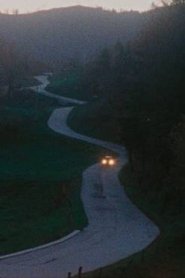
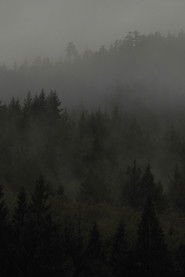
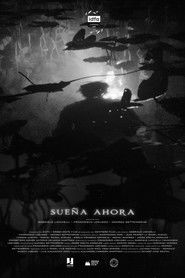
When his brother disappears in the night, the young child follows him into a dark forest—and embarks on a journey through pain and hope to find his way back into the light.
How do historical revisionism and negationism work today? The film examines this question using the example of the peace statues for the "comfort women" of World War II—victims of human trafficking—which are to be removed from public spaces. It is a rarely told story of decades of revisionism and worldwide resistance. The victims were mostly poor women and girls whose stories were long ignored. Can denial and erasure completely wipe out the past? Will the truth remain hidden forever, or will it be replaced by an idealized past?
The War in Kassel and Chongqing - Explorations from the protagonist's perspective. She travels through the last words and remnants of the war to Chongqing and Kassel, two cities 7,900 kilometers apart. Although she lived there for a long time, she never experienced the war herself. As someone who grew up in a world heavily influenced by electronic media, images nevertheless give her an idea of the pain and depth. Images make the extent of the war visible and allow the horrors to be felt even beyond actual experience.
In a mosaic of games, films, and media, the protagonist's perspective, a fragmented state of mind, merges, and the boundaries between reality and dreams dissolve. 1g of quetiapine, both a remedy and a means of forgetting, dampens the heart and shatters identity. The film collage reflects on the medicalization of mental suffering and the loneliness that lies in synthetic calm. Through chaotic layers of media, it shows how the self is not healed, but rather rendered illegible and suspended in a borderline state between sedation and despair.
Between memory and the digital realm, we create ghosts: of people around us and of ourselves, in long-forgotten game worlds that now lie dormant on hard drives. These ghosts haunt worlds that are slowly decaying and fading away. Human connections crumble if they are not nurtured—just like our memories and our data. The internet has claimed that it never forgets, but that's not true: it forgets very quickly. Our digital world is transient, even if we hardly want to admit it.
One day, a child sits quietly and attentively in a dilapidated apartment building. A fan gently stirs the air as the child plays with a Rubik's cube, its colorful faces sparkling in the fading light. With delicate movements, the child crosses streets and alleys, discovering hidden possibilities. Despite the threat of decay, small moments full of play, wonder, and hope arise, nourishing creativity. A delicate contrast to the faceless world of adults and the impending collapse that threatens to engulf everything.
Dance connects! Several generations dance for themselves and yet together. Each movement reveals its own attitude toward space, time, and internal and external barriers. The bodies and their gestures resonate with the sound and open up new approaches to silent acts of resistance, vitality, and becoming. A loving film miniature on 16mm, hand-developed, marked by traces and scratches from the analog process, revealing the fragility of the moment.
In 2022, the Statue of Peace "Nujin" was erected at the University of Kassel, honouring the countless female victims of the Asia-Pacific wars. However, shortly after International Women's Day in 2023, the university administration abruptly removed the statue - without public explanation. Outraged, citizens and students formed the "Save Nujin" initiative.
While her grandmother Elsa climbs down into a mysterious hole every day, her granddaughter Maditha can only walk over it. As the hole gets bigger and bigger, she has to find out what is down there.
What does homesickness taste like? In her found footage self-portrait, Jisu Kim outlines her search for the origin of sadness. No diagnosis strengthens the patient; rather, it is the question that does so: What helps when the diagnosis will never bring a cure?
From liveliness to rigidity—war scars the city and distorts the faces of its inhabitants until a sunflower becomes a symbol of hope. A digital, AI-assisted collage of scenes that oscillate between fear and resistance.
A long-time resident of the farm, the filmmaker sets up a camera to observe this community living physically and ideologically on the margins of consumer society. In this multigenerational, interdependent community, each individual contributes in their own way to growing or raising almost all their food and, more broadly, to creating their own shared space and way of life. They seek to live in harmony with plants and animals, adopting an approach based on respect and recognition for their ecosystem. Images and sound express this vision, often placing humans in relation to their environment. The flexible frame also highlights manual labour with its sometimes delicate, sometimes laborious gestures. This visually stunning work was filmed over two years and follows the seasons. It’s punctuated by cycles—from sowing to harvesting and from birth to slaughter—developing an inspiring reflection on society, nature, and life through ellipsis and fluidity.
DPW takes the orange & black ring back to Cary for Showdown In Cary II! The fallout from Super Battle sees possible new champions, challengers, & wrestlers trying to make their way up the ladder!
An Iranian expat journeys back to his homeland, where he must face his domineering father and grapple with complex emotions about family ties, cultural identity, and his place in the world.
In Cuba, the nights are very dark indeed when there’s yet another power outage—but as much as possible, life goes on. People find their way around in the pitch dark, cyclists loom out of the blackness, children hang out on the streets by the light of flashlights. At the same time, the disruption appears to create intimacy: a priest takes the opportunity to open the Bible by candlelight and reads about the creation of light and darkness, an aged blind singer plays the guitar for his wife in their bedroom, a boy and his teacher play endless games of chess in the half-light, a fisherman heads calmly into the water with a lantern. Headlights from passing cars flash over houses shrouded in darkness, while the people inside sing and talk under the glow of portable lights.
Behind you lies the sea; before you stands the enemy. This is the reality for the people of Gaza—and for Palestinian journalist Sami, who records it all with his 360° camera in the VR documentary Under the Same Sky. Driving along the Mediterranean coast in a press vehicle, he documents the war in the Gaza Strip. On one side are peaceful waters; on the other, heart-wrenching ruins.
We have detected that you are using an ad blocker. In order to view this page please disable your ad blocker or whitelist this site from your ad blocker. Thanks!