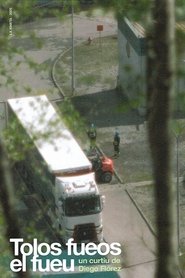
The Asturian mining regions face a threatening waste incineration project. Through the flames, we glimpse the past of a territory that has changed profoundly.
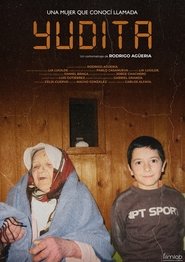
When Rodrigo was a child, he would eat at his grandmother Marité's house and wait until his aunt Montse came home from work. Without sitting down, Montse would fill a plastic bag with a loaf of bread, a container of food, empty plastic bottles, and a hot brick wrapped in newspaper. She was going to take the food to someone. One day, she decided to take Rodrigo with her on one condition: no talking. Eighteen years later, he remembers nothing.
Saltar is a documentary essay that breaks the silence surrounding suicide to explore the reality of a region with the highest suicide rate in the country. Through different characters, places, and situations, we learn how suicide is experienced when it has become relatively commonplace.
A satirical dive into the mind-melting media simulacra of the internet and reality TV, Jake Brush’s exercise in brain rot uses a real episode of Hoarders as a jumping off point into a frazzled cacophony of neon techno-noise and bizarre caricatures. Through absurdist monologue, whirlwind editing, and crackling animation, this short blends Marshal McLuhan and Jake Paul to take down our pervasive era of smoothbrain infoglut.
Manu and her grandfather are passionate soccer fans. When the TV breaks down shortly before the final, she hatches a plan. An exciting chase begins. Will she be back in time for her grandfather to witness the big event?
The story of an Iranian family scattered across years and borders, where home becomes a fragmented memory. The essay film shows how displacement also shapes time and encounters remain possible only in images.
The traces of three characters, Maria, Daniel, and Jackpot, can be read like an experimental coming-of-age film. What effects do intergenerational traumas have on the psyche, on desire, on the formation of our identity?
The 80-year-old Ms. Pupak lives in a retirement home in Dieburg, Hesse. The film shows her everyday life in slow motion and gives her space for honest and self-reflective words about her past, the present, and the last stage of her life.
An animated documentary that bridges the gap between research and neurodiverse everyday life. A curious, gentle hedgehog interviewer accompanies Gaura, an artist with ADHD traits. His voice opens a window to honest reflections on identity, creativity, and self-understanding. Warm and grounded, the film invites recognition beyond medical labels and diagnoses.
When his brother disappears in the night, the young child follows him into a dark forest—and embarks on a journey through pain and hope to find his way back into the light.
How do historical revisionism and negationism work today? The film examines this question using the example of the peace statues for the "comfort women" of World War II—victims of human trafficking—which are to be removed from public spaces. It is a rarely told story of decades of revisionism and worldwide resistance. The victims were mostly poor women and girls whose stories were long ignored. Can denial and erasure completely wipe out the past? Will the truth remain hidden forever, or will it be replaced by an idealized past?
The War in Kassel and Chongqing - Explorations from the protagonist's perspective. She travels through the last words and remnants of the war to Chongqing and Kassel, two cities 7,900 kilometers apart. Although she lived there for a long time, she never experienced the war herself. As someone who grew up in a world heavily influenced by electronic media, images nevertheless give her an idea of the pain and depth. Images make the extent of the war visible and allow the horrors to be felt even beyond actual experience.
In her essayistic documentary film, Katrin Esser stages the story of her mother, who suffers from Alzheimer's disease. The course of the illness is told from two perspectives: that of the Polish caregiver Violetta and that of the daughter. They take turns recounting their experiences, the limits of care, excessive demands, working conditions, exploitation within the system, and death. The only filming location is the apartment, which alternates between living space, museum, and crime scene. Esser's staging reveals layers of memory and shows that remembering and forgetting are very individual processes.
In a mosaic of games, films, and media, the protagonist's perspective, a fragmented state of mind, merges, and the boundaries between reality and dreams dissolve. 1g of quetiapine, both a remedy and a means of forgetting, dampens the heart and shatters identity. The film collage reflects on the medicalization of mental suffering and the loneliness that lies in synthetic calm. Through chaotic layers of media, it shows how the self is not healed, but rather rendered illegible and suspended in a borderline state between sedation and despair.
Between memory and the digital realm, we create ghosts: of people around us and of ourselves, in long-forgotten game worlds that now lie dormant on hard drives. These ghosts haunt worlds that are slowly decaying and fading away. Human connections crumble if they are not nurtured—just like our memories and our data. The internet has claimed that it never forgets, but that's not true: it forgets very quickly. Our digital world is transient, even if we hardly want to admit it.
One day, a child sits quietly and attentively in a dilapidated apartment building. A fan gently stirs the air as the child plays with a Rubik's cube, its colorful faces sparkling in the fading light. With delicate movements, the child crosses streets and alleys, discovering hidden possibilities. Despite the threat of decay, small moments full of play, wonder, and hope arise, nourishing creativity. A delicate contrast to the faceless world of adults and the impending collapse that threatens to engulf everything.
We have detected that you are using an ad blocker. In order to view this page please disable your ad blocker or whitelist this site from your ad blocker. Thanks!