After concluding the now-legendary public access TV series, The Pain Factory, Michael Nine embarked on a new and more subversive public access endeavor: a collaboration with Scott Arford called Fuck TV. Whereas The Pain Factory predominantly revolved around experimental music performances, Fuck TV was a comprehensive and experiential audio-visual presentation. Aired to a passive and unsuspecting audience on San Francisco’s public access channel from 1997 to 1998, each episode of Fuck TV was dedicated to a specific topic, combining video collage and cut-up techniques set to a harsh electronic soundtrack. The resultant overload of processed imagery and visceral sound was unlike anything presented on television before or since. EPISODES: Yule Bible, Cults, Riots, Animals, Executions, Static, Media, Haterella (edited version), Self Annihilation Live, Electricity.
The film tells the story of the first award ceremony of 1,052 meritorious generals of the Chinese People's Liberation Army On September 23, 1955, the 22nd Meeting of the Standing Committee of the First National People's Congress decided to award Zhu De and other 10 senior generals of the Chinese People's Liberation Army with the rank of Marshal of the People's Republic of China, and they were awarded by order of the then President Mao Zedong. On September 27, 1955, the Central Military Commission issued a special telegram and announced the order to award Su Yu and other 1,038 senior officers of the Chinese People's Liberation Army with the rank of general through the general ceremony ceremony held by the State Council. These include 10 generals, 55 generals, 175 lieutenant generals, and 798 major generals
As children, a Mozambique native and a Portuguese colonialist were friends. Years have passed and Mozambique is fighting for its independence. Two childhood friends meet on opposing sides.
We've all heard of the atomic bomb, but in the late 1950s, an idea was conceived of a bomb which would maximize damage to people, but minimize damage to buildings and vital infrastructure: perfect for an occupying army. This is the story of a man and his bomb: a melding of world events and scientific discovery inspire the neutron bomb, one of the most hated nuclear weapons ever invented.
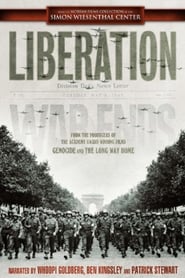
Liberation tells the dramatic story of the battle waged on two fronts during World War II - the Allied campaign to liberate Europe and Hitler's genocidal campaign against the Jews. The World War II documentary uses film footage, radio broadcasts, and period music gathered from archives around the world. Interwoven throughout the film are the compelling stories of the Jews of Europe - unforgettable stories of tragedy, courage, resistance, and survival. Liberation begins in 1942, when Adolf Hitler was still at the height of his power and the Allies began envisioning a cross-channel invasion of Europe.
An elderly Jewish woman, who was a teenager during the outset of the Holocaust and was forced to choose between her own life and her younger brother's, still lives with the guilt until she finally shares her nightmare experience with her own adult daughter.
The story of D-Day has been told from the point of view of the soldiers who fought in it, the tacticians who planned it and the generals who led it.
But that epic event in world history has never been told before through the perspective of the strange handful of spies who made it possible.
D-Day was a great victory of arms, a tactical coup, and a moral crusade. But it was also a triumph for espionage, deceit, and thinking of the most twisted sort.
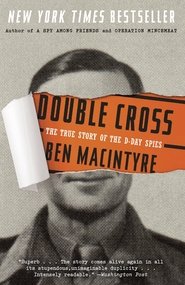
Following on from his hugely successful BBC Two documentaries, Operation Mincemeat and Double Agent: The Eddie Chapman Story (Agent Zigzag), writer and presenter Ben Macintyre returns to the small screen to bring to life his third best-selling book - Double Cross The True Story of the D-Day Spies.
Macintyre reveals the gripping true story of five of the double agents who helped to make D-day such a success.
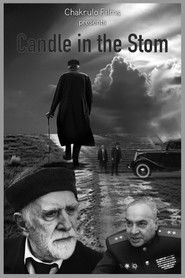
After the Russian Red Army occupied independent Georgia, the renowned Georgian historian and researcher, Eqvtime Takaishvili, was entrusted with the incredibly difficult task of safely transporting most of Georgia's treasures abroad to protect them from the Soviet regime, ensuring their intact return. Over the course of 25 painstaking and perilous years, Eqvtime managed to bring back all the treasures without any losses. Upon his return, the 82-year-old Eqvtime faced questioning by KGB General Nikoloz Rukhadze. He was subsequently expelled from the University of Georgia, sentenced to house arrest, and prohibited from receiving visits from friends and family; many of whom were also arrested.
The film begins with the First World War and ends in 1945. Without exception, recordings from this period were used, which came from weekly news reports from different countries. Previously unpublished scenes about the private life of Adolf Hitler and Eva Braun were also shown for the first time. The film was originally built into a frame story. The Off Commentary begins with the words: "This film [...] is a document of delusion that on the way to power tore an entire people and a whole world into disaster. This film portrays the suffering of a generation that only ended five to twelve. " The film premiered in Cologne on November 20, 1953, but was immediately banned by Federal Interior Minister Gerhard Schröder in agreement with the interior ministers of the federal states of the Federal Republic of Germany.
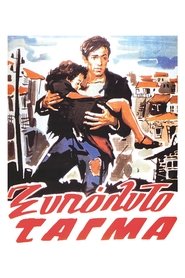
The story of a besieged country in wartime and the effect of such on the children. Told in flashback by a young man after the war, he tells how he and his orphaned sister can barely subsist and he has become a petty thief. He comes across a group of boys, the "Barefoot Batallion", who steal food from the Germans and distribute it to the needy and destitute of the city. The boys take pity on the brother and sister and let the two join them. In addition to their work of stealing food and provisions, they also hide and eventually smuggle an American aviator out of the country
When Peter went to the war with the Nazis to the front, his son gave him a rhinoceros beetle he captured near his home, which the soldier took with him. Now they have to plunge into battle and fighting to see how the sky becomes black because of the gunpowder and the enemy siege, and hundreds of bullets are circling around them. But they will go back to where someone waits for them.
A Second World War documentary film produced for and by the National Film Board of Canada in 1942 as part of the "Canada Carries On" short documentary series. It uses stock footage, dating back to the First World War, in its theme of showing how dependent modern war vehicles are on having a fuel supply source. In the First World War, Britain's sea power was preserved through the maintenance of a series of coaling stations dotting the Seven Seas. With the change to oil, rather than coal, the necessities for European nations, without home supply, are dependent on the Near-and-Far East where the pipe-lines and oil production have to be defended against attacks by the Axis powers. Canada's role in oil production is also highlighted.
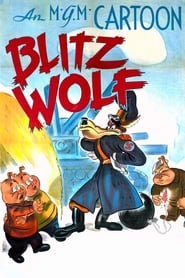
Yet another variation on the Three Little Pigs theme, this time told as WW2 anti-German propaganda (the US had just entered the war), with the wolf as a thinly-disguised Hitler.
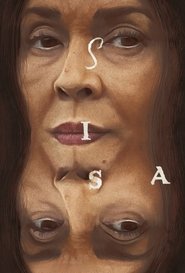
The Philippines, 1902. The land is raw, wounded, occupied. Smoke clings to the trees. Blood soaks the soil. The war is over – but the violence lingers. Widows fill the villages. Mothers vanish into silence. Among them walks Sisa (Hilda Koronel), barefoot and broken, dismissed as mad by those who fear what they don't understand. But madness is only the surface.
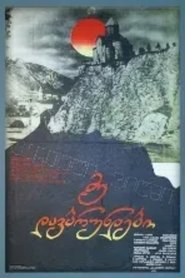
The film is about a young Georgian poet Mirza Gelovani, who died in WWII. It also tells the story of Mirza Gelovani’s contemporaries who sacrificed their youth to their homeland
We have detected that you are using an ad blocker. In order to view this page please disable your ad blocker or whitelist this site from your ad blocker. Thanks!