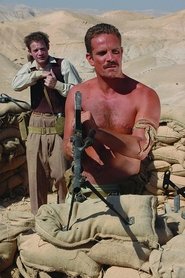
1948 War. Lolek, a young Holocaust survivor ,arrives in Israel and thrown in the middle of the desert. A stranger to the language and the new identity he is given, he is assigned in an isolated post under a brutal commander and the burning sun. Afflicted by homesickness and the heat, he sets out to look for some shade
Silently conveys a couple's fear of an immanent nuclear blast. Part of Sweet Disaster; a 1986 series of short films made for Channel 4. It consists of “animated visions of the apocalypse”.
Michael Blackwell entered the United States Navy on Veteran's Day, 2002 and served for more than nine years. While stationed with the now-disestablished Fleet Combat Camera Group Pacific, he served alongside United States Army 5th and 10th group Special Forces in Iraq.
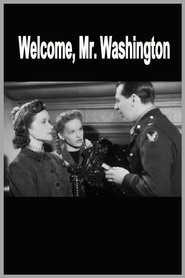
Based on a story by author Noel Streatfeild, the film trells the story of two sisters who are left penniless by their father's sudden death and lease their estate as an airbase to US forces in Britain to help the war effort. Both eventually fall for American servicemen.
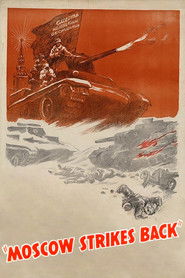
A Soviet documentary chronicling the Battle of Moscow (October 1941 – January 1942), when Red Army forces repelled the German advance on the capital. Shot by numerous frontline cameramen, it combines harrowing footage of combat and civilian suffering with scenes of Nazi atrocities, framed against themes of Russian heroism and cultural survival. Originally released under the title Defeat of the German Armies Near Moscow, the English-language version, narrated by Edward G. Robinson, was retitled Moscow Strikes Back. The film won the 1943 Academy Award for Best Documentary. Warning: contains graphic images.
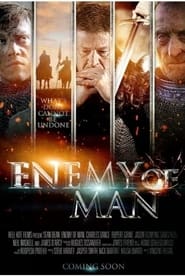
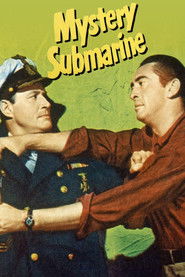
Posing as an ex-German medical officer, a U. S. Navy Intelligence Officer sets out to rescue a kidnapped scientist, and sink a Nazi submarine, hiding off the coast of South America.
When Peter went to the war with the Nazis to the front, his son gave him a rhinoceros beetle he captured near his home, which the soldier took with him. Now they have to plunge into battle and fighting to see how the sky becomes black because of the gunpowder and the enemy siege, and hundreds of bullets are circling around them. But they will go back to where someone waits for them.
During World War II, a hand-picked group of American GI's undertook a bizarre mission: create a traveling road show of deception on the battlefields of Europe, with the German Army as their audience. The 23rd Headquarters Special Troops used inflatable rubber tanks, sound trucks, and dazzling performance art to bluff the enemy again and again, often right along the front lines. Many of the men picked to carry out these dangerous deception missions were artists. Some went on to become famous, including fashion designer Bill Blass. In their spare time, they painted and sketched their way across Europe, creating a unique and moving visual record of their war. Their secret mission was kept hushed up for nearly 50 years after the war's end.
The marriage of a wealthy and frivolous member of French nobility, Loyette Merval, to an American aristocratic idler named Willard Standish, is a loving one, except for their mutual dissatisfaction with Willard's idleness. After Willard becomes a chauffeur, Loyette's subsequent disgust causes him to quit. When the war begins, Willard joins the French Secret Service, while Loyette continues her social life, upset about their separation. After Willard, wounded, hides in a convent, Loyette leaves to find him.
Filmed and directed by the Iraqis themselves -- thousands of them, from all walks of life, all over their country. The producers, who distributed more than 150 digital video cameras across the country, condensed more than 400 hours of footage into an unprecedented, and startling, look at life in a war zone. It's a new genre of filmmaking.
On the border of North and South Vietnam, civilians live underground and cultivate their land in the dead of night, farmers take up arms, and bombs fall like clockwork. Joris Ivens and Marceline Loridan’s record of daily life in one of the most volatile regions of a war-torn, divided country is both a hazardous piece of first-hand journalism and a shattering work in its own right, simmering with barely repressed anger.
April 17, 1944. A high-profile trial for sedition opens in Washington. Dozens of individuals—including members of Congress—are accused of cooperating with German forces, participating in pro-Nazi movements, and plotting to overthrow the U.S. government. How did this happen in the world's greatest democracy? And why does no one remember this major episode in American history?
The computer animated film, presented at the Shanghai World Expo 2010, tells the story of the tiny state of Monaco, located on the Mediterranean Sea. Important stages in the history of the now world-famous principality are shown, from the mythological beginnings through the warlike Middle Ages to modern times including the prestigious Grand Prix of Monaco to close finally with a science fiction look into the future of Monaco.
In the world of the Warring States, where rival warlords vied to take over all of Japan, a uniquely ingenious strategist made a name for himself: Takenaka Shigeharu (nicknamed Hanbei). Hanbei’s former opponent, Oda Nobunaga, recognized his genius. When Kinoshita Tokichiro (later Toyotomi Hideyoshi) visited under Oda’s orders, Hanbei realized that he had the potential to dominate Japan—he then became his vassal and led Hideyoshi to victory in many battles. This original ‘Warring States Musical’ seeks to show Hanbei’s true character—his shy and loyal nature, as despite his military exploits he didn’t care about making himself famous or wealthy; his marital love with Seishitsu Ine (Tokugetsu-In) who had longed for and supported him since their childhood; as well as his deep bond with his fellow strategist under Hideyoshi, Kuroda Kanbei.
We have detected that you are using an ad blocker. In order to view this page please disable your ad blocker or whitelist this site from your ad blocker. Thanks!