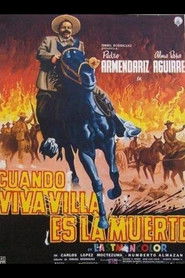
The third and final chapter of director Ismael Rodríguez's series about Pancho Villa. Several stories about the life and death of the famous mexican revolutionary general.
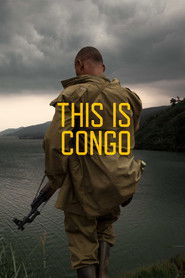
An unfiltered look in to the lives of 3 characters surviving amongst the most recent cycle of conflict in the Democratic Republic of Congo, otherwise known as the M23 rebellion.
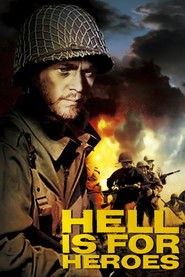
World War II drama where the action centers around a single maneuver by a squad of GIs in retaliation against the force of the German Siegfried line. Reese joins a group of weary GIs unexpectedly ordered back into the line when on their way to a rest area. While most of the men withdraw from their positions facing a German pillbox at the far side of a mine-field, half a dozen men are left to protect a wide front. By various ruses, they manage to convince the Germans that a large force is still holding the position. Then Reese leads two of the men in an unauthorized and unsuccessful attack on the pillbox, in which the other two are killed; and when the main platoon returns, he is threatened with court-martial. Rather that face the disgrace, and in an attempt to show he was right, he makes a one-man attack on the pillbox.
The film "Pilecki" is a fictionalized documentary depicting the story of Witold Pilecki, from his youth through action during World War II, up to the imprisonment and death in May 1948.
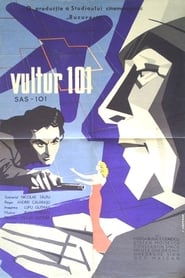
A love story sprinkled with spies. A young hero pilot is vulnerable in front of foreign agents due to his love. Based on the novel "Zbor de noapte" (Night Flight) by Nicolae Tăutu.
Acting debut for Ion Besoiu
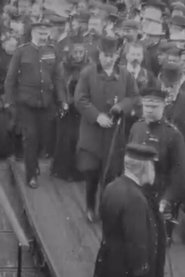
Watched by crowds, Sir Redvers Buller, Lady Buller, the Mayor of Southampton and others walk along the gangway leading to the ship towards the camera. Sir Redvers pauses to be introduced to one of the ship's officers before embarking. According to BFI programme notes, the filmmaker William K.L. Dickson can be seen bottom left, attempting to introduce himself to General Buller as he passes. Film companies were in competition to film reportage of the Boer War and Dickson was one of those filmmakers keen to do so.
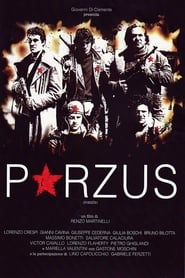
In 1945, at the huts above Porzûs, a hundred partisans from the Garibaldi Brigade and the Gap massacred about twenty partisans from Osoppo. They were commanded by Geko, who later went around saying that the group was accused of treason and collusion with the fascists, all to avoid consequences. But at the end of the war, Storno, who had escaped the massacre, sentenced Geko and his men to life imprisonment in absentia.
After the end of World War II, a young partisan falls in love with a German secretary who is captured and imprisoned by partisans. He decides to free her and escape with her.
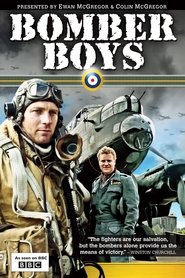
Brothers Colin and Ewan McGregor follow up their documentary The Battle of Britain with a film exploring Bomber Command, a rarely told story from the Second World War. The film focuses primarily on the men who fought and died in the skies above occupied Europe, with numerous examples of individual heroism and extraordinary collective spirit, and Colin learns to fly the key aircraft of the campaign: the Lancaster bomber. But this is also the story of a controversy that has lasted almost 70 years. The program covers six years of wartime operations, and traces the obstacles and challenges that were overcome as the RAF developed and deployed the awesome fighting force that was Bomber Command.
Documentary short film depicting the correct methods of surviving the crash landing of a military aircraft in the desert. Methods of conserving water, providing shelter, and signaling for help are depicted.
Thanks to his friendliness towards Nazis, Sarajevo businessman gets more and more rich during WW2. However, his infatuation towards the Jewish girl causes his downfall.
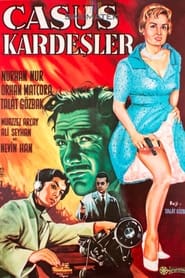
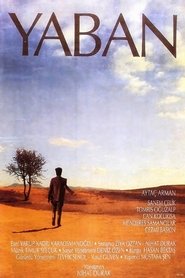
Ahmet Celal, who was injured during the war, is in great pain and a young woman named Emine helps him and saves him and heals him. A stormy love breaks out in those scenes and the intrigued life of that love is worked out.
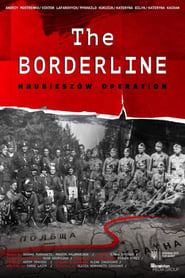
Two warriors of the guerrilla movements, the one from the Ukrainian Insurgent Army (UPA) and the other from the Polish Home Army (AK), narrate on the atrocities of German and Soviet occupation in 1939-1946, argue about the mutual harms of the past, and reveal what made them unite after all they've been through.
We have detected that you are using an ad blocker. In order to view this page please disable your ad blocker or whitelist this site from your ad blocker. Thanks!