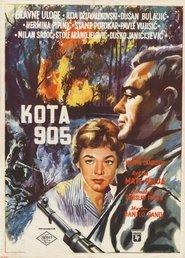
After the war, a Yugoslav army captain, Vladimir, is in charge of suppressing armed supporters of the former king's regime, led by major Momir. After Vladimir's best friend is killed, he joins the rebels pretending to be one of the king's supporters. However, one of Momir's supporters, a man who harbors rebels, has an attractive daughter who is engaged to marry Momir. She knows that Vladimir is an officer of the Yugoslav army, because she has seen him wearing a Yugoslav uniform. Vladimir fears that she might betray him.
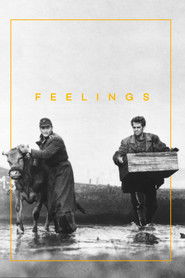
When a widowed fisherman moves in with his brother and sister-in-law to escape the collapsing Nazi forces, he finds himself caught up, like Lithuania itself, in perilous questions of collaboration and occupation, resistance and escape.
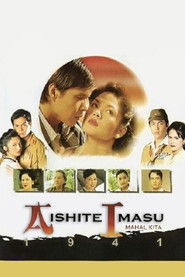
This story of love and espionage focuses on political turmoil as a small nation struggles to free itself from colonial rule, and one man tries to serve both justice and his own heart.
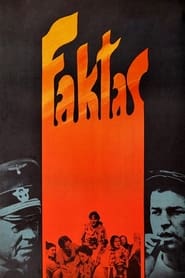
Facts is a dramatization of a massacre in a Lithuanian village during World War II when Nazis rounded up over 100 men, women, and children accused of partisan activity and then torched the houses in which they were held. Using Russian interrogations of a few survivors, the testimony of villagers, and some of the Germans responsible for the killing, the film gradually reconstructs the event and its context.
The village idiot lives in a hut with his sick mother. His neighbors are the Jewish family of the local blacksmith Mendel, and the guy is secretly in love with his youngest daughter Sonya.
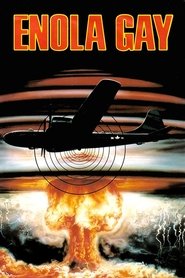
The story of Col. Paul Tibbets and his crew who flew the Enola Gay, the plane that dropped the first atomic bomb on Hiroshima, bringing World War II to a close.
From its old age, a SIG-510 rifle tells the story of its military service as a weapon used by the Chilean army. It tells of his military training, its frustrated desire to serve his country, and the memories it has of the Coup d'état that occurred in 1973.
Lina, a young girl in war-torn Beirut, finds an ally and friend in Sihan, her domineering aunt's maid. Sihan shows Lina what her life could be like, but tests the girl's limits when she asks her to help plot her escape from the city.
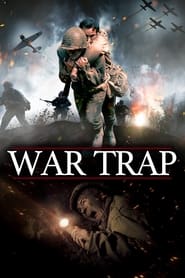
During the Second World War, following an ambush carried out in a fort by German troops, Eugène, an allied soldier, finds himself trapped underground. Now fighting for his survival, his destiny will play out alongside that of another survivor and both must find a way extricate themselves from certain death, unaware of the terrible battle that awaits them on the outside.
Montenegro in 1944. A highland farmer tries to change his only son's decision to join the partisans, while minding his own business and not taking any side himself. During the work field they are both captured by Chetniks who previously killed some local shepherds, and their fate is about to be decided by a reckless gang of murderers.
Wishing to record the heroism of the Third Army under the command of General Boza Jankovic and its Morava Division II Line led by Milovan Nedic, the producer Djoka Bogdanovic shot twelve "cinematographic images" with his two cameramen on the teritorry where these armies fought during the 16th July 1913.
Inya, a heroine of the Philippine resistance against the Japanese during World War II, recalls events involving her husband Edilberto and their childhood friend Ignacio, a transvestite who, masquerading as a woman also named Inya, becomes the lover of the local Japanese commander, Ichiru, and is caught between a duty to be a spy for his country and friends and his reluctant but growing love for Ichiru.
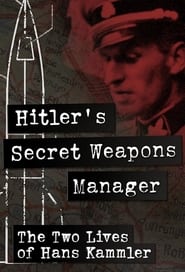
Did the man behind Hitler's secret weapons program survive the war? Was SS General Hans Kammler covertly brought to the USA to safeguard his knowledge? Allegedly he had committed suicide on 9 May 1945. Yet, recently found documents contradict the official version. Kammler controlled a widespread network of underground production sites vital to the German war effort. But Kammler was not merely in charge of the latest state of the art weapons technology. The former architect and civil engineer was also one of the key figures behind the construction of concentration camps and the systematic employment of their inmates as forced laborers. In the end, he escaped being charged as a war criminal at the Nuremberg trials.
We have detected that you are using an ad blocker. In order to view this page please disable your ad blocker or whitelist this site from your ad blocker. Thanks!