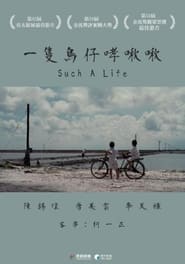
'Such a Life' is quite a sad film. It is set in the sixties, in a village on the west coast of Taiwan, where many are succumbing to 'black foot', a disease caused by drinking contaminated well water. The only 'cure' is to amputate the afflicted limb, and to avoid drinking the contaminated water. Many in the village were already sick, and few could afford to have tap-water installed. At the center of the story is Ah Chung, who lives with his grandfather, who has already lost one leg to 'black foot'. In the same village also live an opera family, who are finding things increasingly difficult there, an oyster farmer, who complains that his oysters are being poisoned by a nearby pharmaceutical plant, and an assortment of children who enjoy swimming in the sea, and who bully Ah Chung. A significant portion of the action also takes place in the village school, where Ah Chung is having trouble keeping up with the fees.
Like an antipodean version of Romeo and Juliet, it emerges that Warri and Yatungka became the last nomads because they had married outside their tribal laws and eloped to the most inaccessible of regions. In 1977 the land was stricken by a severe drought and their tribal elders mounted a search for them with the help of a party of white men led by Dr Bill Peasley and one of their own number, a childhood friend named Mudjon. The film takes Dr Peasley back into the desert to relive his momentous journey with Mudjon and culminates with poignant archival footage of the elderly couple found naked and starving.
When the Rising starts, the local sweet shops are the first to be looted by Dubliners living in the tenements. Noel and Tom race off and leave their mothers and sisters at home but the havoc of the next few days will come right to everyone’s door.
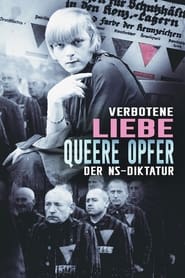
Sexual minorities were oppressed, imprisoned and murdered by the Nazis. Paragraph 175 criminalized homosexual men during the Nazi era – but the Nazis also discriminated against lesbians and trans people. They should be excluded from the national community. More than 50,000 queer people have been proven to have been persecuted. The documentary highlights three poignant fates in the context of Nazi terror.
In two imaginary states consumed by wars, the kings decide to resort to affinity to avoid wars. On the way, the king's son escapes from his guards, but he meets his awaited bride, Set Elhosn , without knowing who she is. He falls in love with her while trying to escape the marriage.
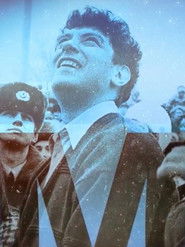
A story told by those who knew Boris Nemtsov at different times: when he was a young scientist and took his first steps in politics; when he held high government offices and was considered Boris Yeltsin's heir apparent; when he led Russia's democratic opposition to Vladimir Putin.
The making of patriotic films was not rare among FAI productions, and Il bacio della gloria is one example, together with Armi e amori (1913) and Per la Patria! (1915). In this Speech from the Throne, which opened the 14th Legislature, the King of Italy stressed and underscored with his words the period recalling the story of the glorious conquering of Libya, sending warm greetings to the courageous men who fought, and to the heroes who fell, for the loftiness of their country. In a response worthy of these august words, immediately thereafter Pathé released this patriotic film which tells one of the many stories of courage which bring glory to the Italian flag.
A French film star visits Coimbra and it's old university, and breaks a poor local girl's heart, as her fiancee turns his attentions to the foreign girl. In a play within the story, one is told the sad love story of Don Pedro, king of Portugal, and Inês de Castro.
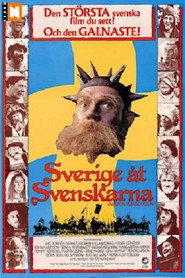
This farce cocerns Sweden's King Gustav (Per Oscarsson who plays all the lead roles). The royal monarchs of three major European countries are patiently or not-so-patiently hovering on the sidelines while watching the future King Gustav closely. No single king appears to possess the brains he was born with, so history seems to be made by default, as it were. Gustav does blunder around, but not enough to miss being crowned king. As a result, France, England, and Germany invade Sweden hoping to take by force what they could not gain by incompetence.
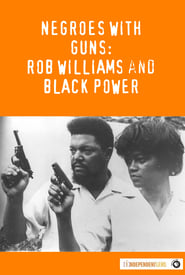
Rob Williams was an African-American living in Monroe, North Carolina in the 1950s and 1960s. Living with injustice and oppression, many African-Americans advocated a non-violent resistance. Williams took a different tack, urging the oppressed to take up arms. Williams was stripped of his rank as leader of the local NAACP chapter, but he continued to encourage local African-Americans to carry weapons as a means of self-defense. Wanted on a kidnapping charge, Williams and his wife fled to Cuba. His radio show Radio Free Dixie could be heard in some parts of the United States.
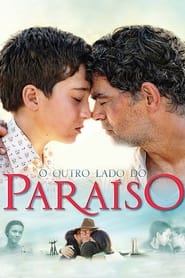
Nando, a 12 year old boy, narrates the adventures of his father Antonio, during the 60s in Brazil, who leaves the inland of the state of Minas to go to Brasília, a recently inaugurated city, but still with construction works in progress.
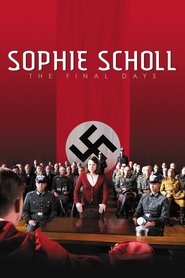
In 1943, as Hitler continues to wage war across Europe, a group of college students mount an underground resistance movement in Munich. Dedicated expressly to the downfall of the monolithic Third Reich war machine, they call themselves the White Rose. One of its few female members, Sophie Scholl is captured during a dangerous mission to distribute pamphlets on campus with her brother Hans. Unwavering in her convictions and loyalty to the White Rose, her cross-examination by the Gestapo quickly escalates into a searing test of wills as Scholl delivers a passionate call to freedom and personal responsibility.
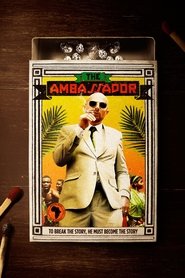
Danish journalist Mads Brügger goes undercover as a Liberian Ambassador to embark on a dangerous yet hysterical journey to uncover the blood diamond trade in Africa.
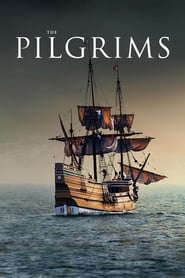
Arguably one of the most fateful and resonant events of the last half millennium, the Pilgrims journey west across the Atlantic in the early 17th century is a seminal, if often misunderstood episode of American and world history. The Pilgrims explores the forces, circumstances, personalities and events that converged to exile the English group in Holland and eventually propel their crossing to the New World; a story universally familiar in broad outline, but almost entirely unfamiliar to a general audience in its rich and compelling historical actuality. Includes the real history of the "first thanksgiving".
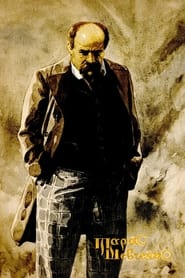
The film adaptation of Taras Shevchenko’s biography of 1925 is the first Ukrainian biopic. At that time, it was one of the most expensive films, as for the first time experts in history, ethnography, and literary studies were involved in pre-production. The famous Modernism artist, academician Vasyl Kryvhevskyi designed the film, and professor Serhii Yefremov served as a consultant. Consisting of numerous short stories, the film that shows the life of Shevchenko as an adolescent, a soldier, a poet, was successfully demonstrated in Ukraine and abroad and became the most acknowledged cinema project of 1926. Amvrosii Buchma played Taras Shevchenko.
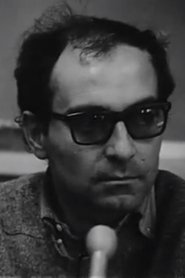
Spring 1970: Godard and Gorin, on the road, visiting colleges, speaking with Andrew Sarris, and explaining, through illustrated notebooks, their newest Dziga Vertov Group project, a film on Palestine.
We have detected that you are using an ad blocker. In order to view this page please disable your ad blocker or whitelist this site from your ad blocker. Thanks!