The life, legacy and musical accomplishments of singer, musician, pianist, songwriter and Civil Rights activist, Nina Simone through interviews with over 50 of the subject’s friends, family, band members, lovers and fellow activists. The film has been called the best of the three Nina Simone films by The New Yorker Magazine.
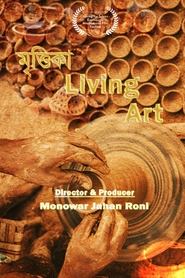
The thousand-year-old tradition of pottery in the Indian subcontinent is now under threat. With the market being flooded with plastic in the evolution of civilization, today this Pal community is becoming displaced.
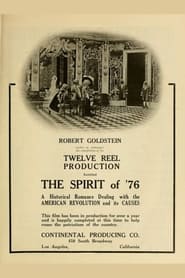
Catherine Montour, a striking half-breed Indian princess, and mistress of King George III aspires to become the first Queen of America when the revolution breaks out.
In Kino Klassika’s first film commission, British filmmaker Mark Cousins imagines a conversation between D.H.Lawrence and Sergei Eisenstein. This playful film essay carries forward Mark’s film dialogue with Eisenstein from his feature film about Eisenstein in Mexico ‘What is this film called Love?’
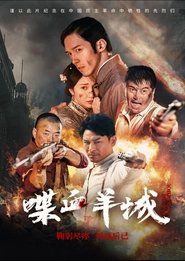
Set in the early years of the Xinhai Revolution, the film tells the story of a group of revolutionaries who, in their pursuit of awakening the masses and advancing China’s democratic movement, risk everything—including their lives. Through sacrifice, courage, and unyielding conviction, they write a stirring chapter of heroism in the history of China's democratic revolution.
Chaudhry – The Martyr is an upcoming biopic action film. The film features Tariq Islam, Shamoon Abbasi, Arbaaz Khan, and Zara Abid in lead roles. Chaudhry - The Martyr is directed by Azeem Sajjad.
Eighteen year old Ida returns home after being raised by nuns, but her father isn't too pleased. Determined to see her married, he publishes an ad and offers suitors a generous dowry.
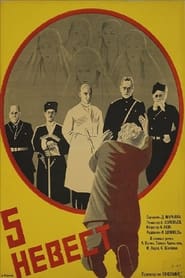
A Soviet propaganda film based on material from the Bolshevik coup. During the Russian civil war, the Whites, that anti-Communist force that fought against the Bolsheviks during that period, capture a Jewish Ukranian village; the gang commander threatens a pogrom, and will kill everyone in the village unless the inhabitants agree to give to the White Officers five virgin girls in wedding dresses. Under such terrible pressure, the Jewish council of the town decides, full of sorrow and despair, to sacrifice their daughters to the drunken officers but fortunately and just in time, a detachment of partisans that belong to the Red Army, comes and frees the village.
In 1911, a willful and determined man from peasant stock named Charles Saganne enlists in the military and is assigned to the Sahara Desert under the aristocratic Colonel Dubreuilh.
Bristol, England, early 19th century. A beautiful young stranger who speaks a weird language is tried for the crime of begging. But when a man claims that he can translate her dialect, it is understood that the woman is a princess from a far away land. She is then welcomed by a family of haughty aristocrats that only wants to heighten their prestige. However, the local reporter is not at all convinced she is what she claims to be and investigates. Is Caraboo really a princess?
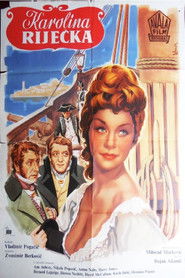
The movie Karolina Rijecka is loosely based on the legendary story of young Karolina Belinic. When the English fleet began firing cannons on the Adriatic port of Rijeka, young Karolina boarded the ship of English Admiral John Leard and negotiated a cease-fire to save the town from destruction.
The war memorials of 1914-1918 have become so familiar that we no longer see them. They've become an invisible museum, blending into the landscape of France. Then, one fine day, a sculpture catches our eye. Another History appears, perhaps the most gigantic artistic project since the cathedrals...
1790, the county of Szerém. József Hajnóczy, a democrat and a reformer is deprived of his position as vice-steward of the county because he is not born a nobleman.
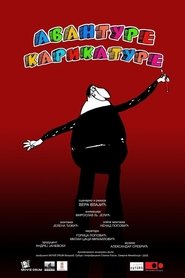
The film connects historical events and the interpretations of those events through caricature, with a focus on artists who left their mark and contributed to the importance of this art in the territory that for more than 70 years was a common cultural space of the peoples of the state of Yugoslavia.
We have detected that you are using an ad blocker. In order to view this page please disable your ad blocker or whitelist this site from your ad blocker. Thanks!