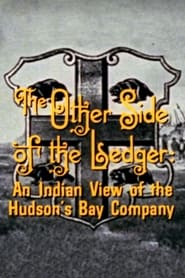
The Hudson's Bay Company's 300th anniversary celebration was no occasion for joy among the people whose lives were tied to the trading stores. This film, narrated by George Manuel, president of the National Indian Brotherhood, presents the view of spokesmen for Canadian Indian and Métis groups. There is a sharp contrast between the official celebrations, with Queen Elizabeth II among the guests, and what Indians have to say about their lot in the Company's operations.
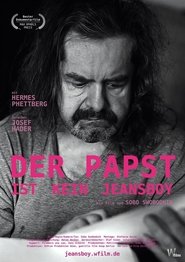
The actor, columnist, author, moderator, the failed pastoral assistant, the self-confessed gay sadomasochist, the total work of art Hermes Phettberg, who has always been relentlessly open about his life, his suffering in himself and the world, gives insight into his current existence. Despite his decline, Phettberg has remained a charismatic, unique "pyre" (as he calls himself) who documents his slowly fading life daily on the Internet and in his weekly column in the Viennese city magazine "Falter" and struggles to survive as Austria's best-known welfare recipient. Sobo Swobodnik shows this daily struggle of a one-time star who became a patronized outsider - with three strokes, a heart attack, extreme bladder weakness and an irrepressible will to go on living.
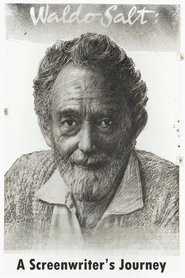
Documentary is about the life and work of American screenwriter Waldo Salt who won two Academy Awards and was put on the Hollywood blacklist in the 1950s. The story is told through interviews with collaborators and friends such as Dustin Hoffman, Robert Redford, Jon Voight, John Schlesinger and with clips from Salt's films, chiefly Midnight Cowboy.
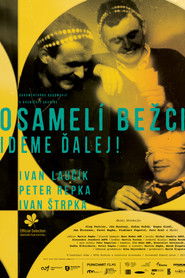
The story of the extraordinary friendship of three great Slovak modernist poets who formed the legendary literary group "The Lonely Runners" in 1963. The group’s existence was announced in the manifesto “The Merits of Three-legged Nightingales” and their motto posited that “the good angels of humanity return to our minds and feelings – frankness of speech, nobility of intentions and righteousness of deeds”. Physically, they parted ways: Peter Repka moved to Germany in the 1970s, Ivan Laučík lived most of his life in the peaceful Liptovsky Mikulas and Ivan Štrpka in Bratislava. Even though their meetings were rare, their friendship held strong despite all obstacles. Their work is still considered one of the most important in modern Slovak poetry. The film follows a meeting of these three giants of poetry and their journey together, during which they meet with friends and visit places important to them. A story of an inspirational friendship.
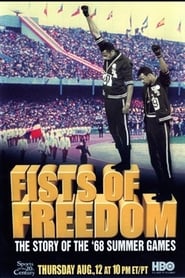
Fists of Freedom examines one of the 20th century’s most memorable moments — the dramatic “Black Power” demonstration of American sprinters Tommie Smith and John Carlos on the victory stand at the 1968 Summer games in Mexico City. Using rare footage, archival photos and interviews with key figures from the era, revisit a pivotal event in American history.
From the beginning, LA punk band the Circle Jerks were rooted in controversy. Formed by ex members of Black Flag and Red Cross (now Redd Kross) in late 1979, the band came to encapsulate the image, sound and energy of California Hardcore Punk. Filmmaker David Markey (1991: The Year Punk Broke, The Slog Movie) mixes in-depth interviews, rare live footage and historical perspective to illustrate the story of one of the most influential bands in the American underground. My Career as a Jerk follows the band from their early days and classic debut to navigating the independent label and touring scene of the 80s to the addictions, fights and injuries that forced their break up. Of course the story doesn't quite end there.
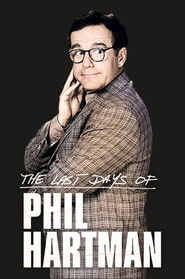
Phil Hartman is best known for his iconic impersonations of Bill Clinton in countless "Saturday Night Live" skits, voicing Troy McClure on "The Simpsons" and starring in the sitcom "NewsRadio." Despite his professional success, Hartman's personal life was far from perfect.
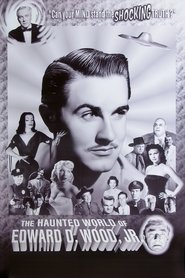
Often called the worst director in the history of cinema, Ed Wood is nevertheless a beloved figure among cult-film aficionados for his oddball productions. This documentary takes a look back at Wood's unique career at the margins of 1950s Hollywood, speaking to those who loved him and hated him. Bela Lugosi Jr. discusses his father's work in the abysmal "Plan 9 From Outer Space," while a Baptist reverend recalls how he was tricked into financing the film.
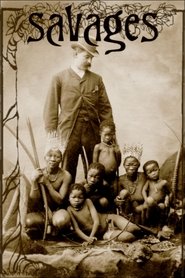
For more than a century the great colonial powers put human beings, taken by force from their native lands, on show as entertainment, just like animals in zoos; a shameful, outrageous and savage treatment of people who were considered subhuman.
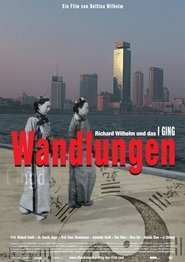
As a young missionary, Richard Wilhelm in 1899 to China, which was then exploited by the colonial powers. He lived there revolts against foreigners, the end of the imperial dynasties and the First World War. In these times of turbulent upheavals he was indefatigable in search of the deepest truth that helps people deal with change and able to shape their own lives. Richard Wilhelm baptized not only Chinese, but accomplished one of the largest translation services of the 20th century: Confucius, LAOTSE the most important texts of Daoism and especially the I CHING THE BOOK OF CHANGES. The book also served many readers in the West as inspiration. Wilhelm is still one of the most important mediators of Chinese culture in Europe.
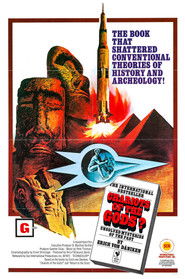
Documentary based on the book by Erich von Däniken concerning the ancient mysteries of the world, such as the pyramids of Egypt and Mexico, ancient cave drawings, the monuments of Easter Island, etc., and the fact that these things and modern civilisation could have been influenced by extraterrestrial visitations hundreds (or perhaps thousands) of years ago.
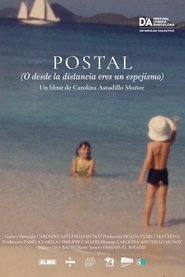
"The palm trees on the reverse are a delusion; so is the pink sand". This line, taken from a poem by Margaret Atwood, lights the path traced in "Postcard". As the years go by, landscapes transform, take on new meanings, and hold onto joys that will never be regained. The sea and the beach, once stages of happy summers, romances, and encounters, will turn into concentration camps or centers of detention and torture. This occurs across different times and places. In this piece, I embark on a journey through some of my works that explore the relationship between testimony, spaces, and time, engaging in dialogue with the beautiful film directed by Alejandro Segovia in 1972.
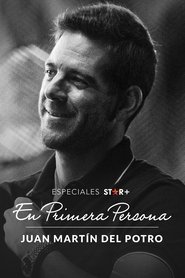
Juan Martín del Potro talks about his beginnings in tennis and all the demands that his professional career demanded from him on a personal and family level. Together with Mariano Zabaleta, former professional tennis player, they talk about love relationships, media exposure and current details without censorship. After the return and after the tears, an unmissable chat between Delpo and Mariano Zabaleta.
We have detected that you are using an ad blocker. In order to view this page please disable your ad blocker or whitelist this site from your ad blocker. Thanks!