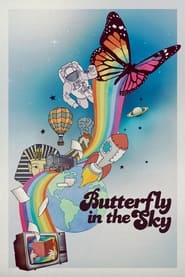
Two seconds into the bubbling synth sounds of its theme song will have a child of the 1980s or ‘90s exclaiming “Reading Rainbow!” Such is the beloved and ubiquitous nature of the classic children’s literary television show that introduced millions of kids to the wonder and importance of books. Not only did the series insist on having kids speak to kids about their favorite stories, but Reading Rainbow introduced the world to one of the most adored television hosts of all time in LeVar Burton. Thanks to his direct, non-patronizing and, most importantly, kind delivery, Burton became a conduit to learning for children of every background—an entrancing guide to subjects unknown.
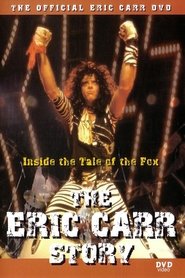
"Tale of the Fox" is the Official Eric Carr Video-Biography. When former Kiss drummer Eric Carr died prematurely from a cancer-related brain hemorrhage in 1991, it shook his family, friends and fans to the core. Director Jack Edward Sawyers documents the short life of the young rocker through a combination of stock footage, outtakes and interviews with the people who knew Carr best. Includes previously unreleased material written and performed by Carr during his pre-Kiss time with the Rockheads.
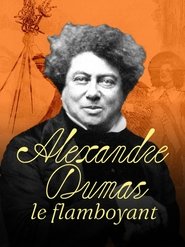
A look back at ten years in the life of the French writer Alexandre Dumas (1802-1870). From financial straits to wealth, from glory to bankruptcy, the decade from 1842 to 1852 summarises his extravagant life filled with twists and turns, characterised by a compulsive creativity and extraordinary appetite for life. We follow Alexandre Dumas as he travels throughout Europe, from Florence to Montecristo, from Marseille to Saint-Germain-en-Laye and from Paris to Brussels. We meet the father of "The Three Musketeers" who, with his remarkable sense for action, took his inspiration from his own story to breathe life into his characters.
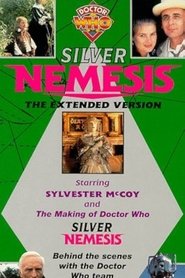
In a special documentary made for public television in the United States, Eric Luskin goes behind the scenes of the 25th anniversary story, Silver Nemesis.
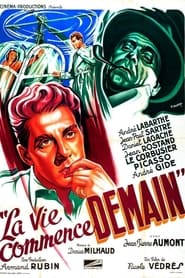
Documentary filmmaker Védrès' first semi-fictional feature was released in France in 1949 as La Vie Commence Demain. The film made it to the U.S. in 1952 as Life Begins Tomorrow. Made in cooperation with UNESCO, the film speculates on the future of mankind after the advent of Atomic Energy. Many prominent French artists and intellects contribute to the narration: Jean-Pierre Aumont plays The Man of Today, Andre Labarthe is the Man of Tomorrow, and Jean-Paul Sartre, Daniel Agache, Jean Rostand, Le Corbusier, Pablo Picasso and Andre Gide are respectively seen as "The Existentialist," "The Psychiatrist,' "The Biologist," "The Architect," "The Artist" and "The Author". Film clips of hospitals, schoolrooms, scientific laboratories, and even nightclubs are woven into Védrès' fascinating tapestry.
Despite decades of opposition from the right, and recent personal setbacks, Gloria Steinem remains one of the most outspoken and visible symbols of the women’s movement today. This film blends interviews of Steinem in her Manhattan apartment, archival footage, photographs from throughout her life and clips from press interviews over the years.
Focusing on the first group of Black debutantes in Canton, Ohio in a decade, this documentary follows the young women as they unpack the ball’s legacy and chart their path forward, both for tradition and themselves.
Every year, thousands of commercials are made that never reach our TV screens, deemed too shocking to see. In order to make it onto the screen, they must clear all manner of obstacles, from fussy clients to obsessive regulators and restrictive rights issues. X-Rated takes a look at these outlawed pieces of advertising, revealing the most explicit, controversial and shocking ads never seen. These are ads that break all manner of taboos, from sex, violence, blasphemy, homosexuality, animal cruelty, rapping pensioners, swearing children, suicidal toys and naked athletes to Kylie in her undies on a bucking bronco. Amongst the contributors are advertising executives, producers and censors. The programme also takes a look at the embarrassing world of western celebrities in Japanese ads.
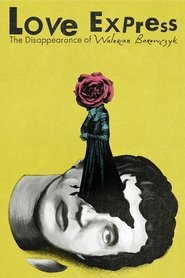
A documentary celebrating the work of Walerian Borowczyk, a director of unparalleled sensitivity, revered in the 1970s, who was later labeled as a maker of erotic movies.
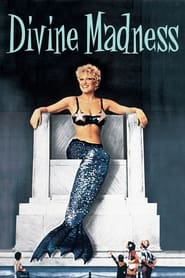
Divine Madness is a 1980 concert film directed by Michael Ritchie, and featuring Bette Midler during her 1979 concert at Pasadena's Civic Auditorium. The 94-minute film features Midler's stand-up comedy routines as well as 16 songs, including "Big Noise From Winnetka," "Paradise," "Shiver Me Timbers," "Fire Down Below," "Stay With Me," "My Mother’s Eyes," "Chapel of Love/Boogie Woogie Bugle Boy," "Do You Want to Dance," "You Can’t Always Get What You Want/I Shall Be Released", "The E-Street Shuffle/Summer (The First Time)/"Leader of the Pack" and "The Rose".
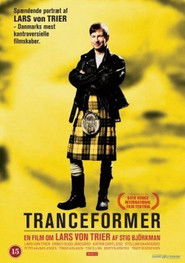
A portrait of Denmark's most acclaimed and controversial director, Lars von Trier. A meeting with von Trier on a private level as well as with his film universe. Filmmaker Stig Björkman follow von Trier during a period of more than two years, meet him at work, at home and at leisure. Written by Fredrik Klasson
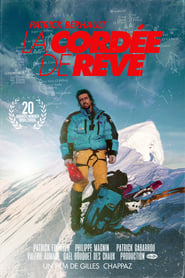
La Cordée de Rêve traces the great alpine journey made from August 2000 to February 2001 by Patrick Berhault. His great crossing of the Alps, here told to his daughter, will be done sometimes alone, sometimes surrounded by friends: Patrick Gabarrou, Patrick Edlinger, Ottavio Fassini, Gaël Bouquet des Chaux, Valérie Aumage, Philippe Magnin. During this alpine trip he will find his brother-in-arms Patrick Edlinger for the dolimitic part and will also see the genesis of the "Cordée Magique Berhault/Magnin". For 167 days, in sneakers in the fall, on touring skis in the winter, Patrick Berhault chained 2 to 3 stages of an average hiker daily, swallowing 1,500 to 2,000 meters of vertical drop and up to 45 kilometers per day. , and climbed 22 peaks. It's called that: "La Grande Cordée" but behind this title lies an exceptional human and sporting performance.
"A man is immortal as long as he lives in the memory of others,” said well-known Czech writer Arnošt Lustig with a wry smile. In December 2006 when her father turned 80, filmmaker Eva Lustigová began to see just how closely his words applied to himself personally. Her method involved recording their meetings and personal interviews together, until Lustig’s death in February 2011. Employing his notorious sense of humor, the film presents the world-renowned author as he recalls a carefree childhood cut short by the Nazi occupation, the horror of life in a concentration camp, the beginnings of his writing career, living in Israel and the USA, and his lifelong friendship with Ota Pavel. Geneva-based Eva Lustigová’s documentary is not a traditional portrait compilation of a famous writer that chronologically investigates his life, but rather a loosely assembled, lively movie about a person with an eternal love for life as it is.
Lithuania, 1941, during World War II. Hundreds of thousands of texts on Jewish culture, stolen by the Germans, are gathered in Vilnius to be classified, either to be stored or to be destroyed. A group of Jewish scholars and writers, commissioned by the invaders to carry out the sorting operations, but reluctant to collaborate and determined to save their legacy, hide many books in the ghetto where they are confined. This is the epic story of the Paper Brigade.
We have detected that you are using an ad blocker. In order to view this page please disable your ad blocker or whitelist this site from your ad blocker. Thanks!